We have a wide network of technical support services all over the country. Consult us so we can point out the Technical Support nearest to you.
902 100 510
sat@airumlogistic.com
AIR COMPRESSOR PROBLEMS: PISTON AND SCREW (CAUSES AND SOLUTIONS)
Piston Compressor:
My piston air compressor is leaking air from the pressure switch valve
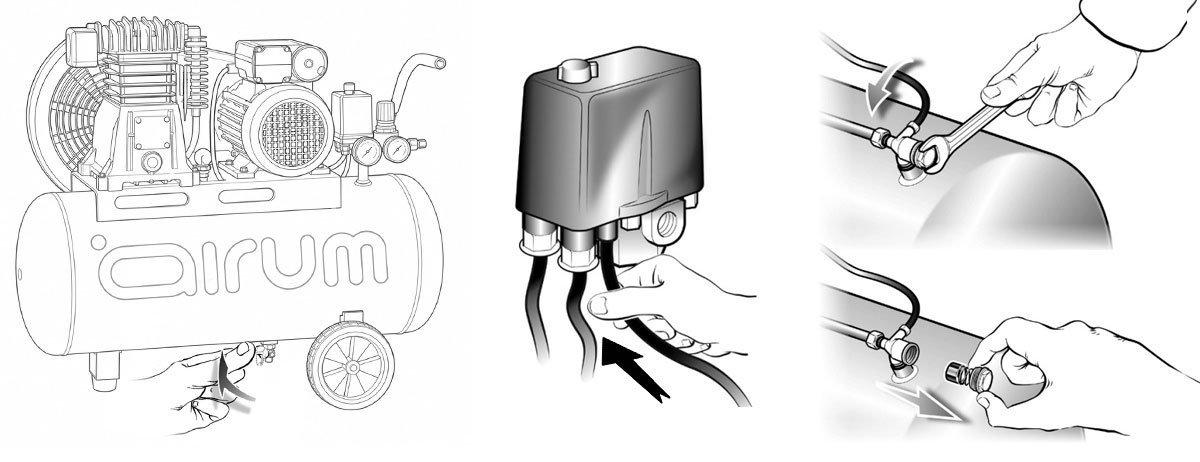
An air leak from the pressure switch valve (especially with the compressor off) can be due to several causes. Check them in this order, from simplest to most complex: The drain valve is open. This is the simplest and most common cause. The condensate drain valve has been left open and is letting air escape from the tank. Locate it at the bottom of the tank and close it properly. The Rilsan tube (a small, flexible plastic tube, usually black or clear, about 6-8 mm in diameter, that runs from the pressure switch to the check valve) is not properly connected. If the Rilsan tube is not properly connected to the pressure switch, air will escape through this connection. Check it and connect it correctly, making sure it is tight and sealed. The check valve is not closing (wear or dirt). If the above is correct, the most likely cause is that the check valve is not closing properly due to wear or dirt on the rubber sealing gasket. Unscrew the hexagonal head of the check valve, clean the seat and the special rubber seal (replace it if worn), reassemble, and tighten carefully. If the leak persists after checking these causes, or if you don't feel confident performing the repair, contact us or your nearest authorized service center, and we will help you resolve the issue.
🛠 Can I do it myself? Yes, these are simple checks and repairs that are within the user's reach.
⚠ Safety: Before checking or handling any component, turn off the compressor, unplug it from the power outlet, and completely empty the air tank by opening the purge valve until no air remains.
My piston air compressor is leaking air from the joints, pipes, and/or fittings
When there are leaks from the fittings and/or joints, the compressor works harder than it should and loses efficiency. To locate the leak, apply soapy water to the joints and fittings: wherever bubbles appear, that's the problem. If the leak is coming from a threaded fitting, start by retightening it; if that's not enough, disassemble the fitting, apply Teflon tape (PTFE) to the male thread or liquid thread sealant if the connection is subjected to greater pressure or vibration, and reassemble and tighten. If, on the other hand, the leak is coming from a gasket, replace it with a new one of the same type and size and tighten the joint well to restore the seal. If you can't locate the leak or can't eliminate it, contact us or the nearest authorized service center, and we'll guide you.
🛠 Can I do it myself? Yes, these are simple checks and repairs that the user can easily perform.
⚠ Safety: For safety, before touching anything, turn off the compressor, disconnect it from the power supply, and completely depressurize the boiler by opening the drain valve until no more air comes out.
My piston air compressor is leaking condensation (water) from the drain valve
If the drain valve is dripping or leaking condensation, the usual cause is very specific: dirt in the valve. The presence of dirt inside the valve prevents a tight seal. Clean the valve thoroughly to remove any residue and check that it closes properly. If it continues to leak after cleaning, contact us or your nearest authorized service center.
🛠 Can I do it myself? Yes, these are simple checks and repairs that the user can do.
⚠ Safety: Always work safely: turn off the compressor, unplug it from the power supply, and release the pressurized air from the boiler through the drain valve before starting any checks.
My new piston compressor isn't building pressure
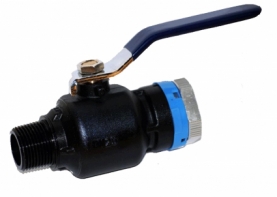
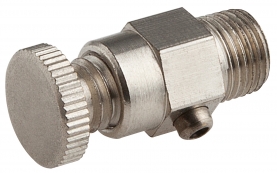
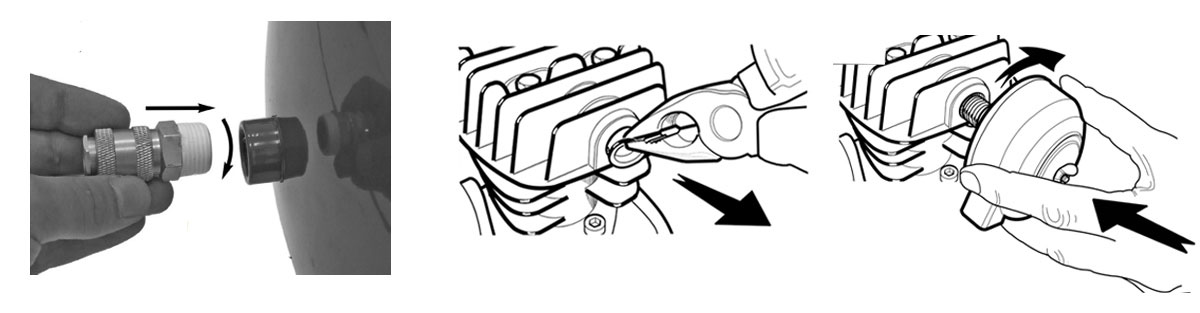
If the compressor is new and the motor is running, but the pressure isn't rising, first check that the quick-action valve or tap is installed at the boiler outlet. If it's not installed or there's only a plug, install it as shown in the image. Next, check the air inlet on the compressor head: on some models, it comes plugged from the factory and the filter is supplied separately. Remove the plug and install the air filter. After installing the valve and filter, restart the compressor and check that the pressure is rising normally.
🛠 Can I do it myself? Yes, these are simple checks and repairs that the user can do.
⚠ Safety: Before checking or handling any component, turn off the compressor, unplug it from the power supply, and make sure the boiler is depressurized.
My piston air compressor performs poorly, starts very often, delivers low pressure, or the pressure doesn't increase
Poor performance with frequent starts and low pressure can have several causes. Check them in this order, from easiest to most complex: Excessive demand or consumption. The air demand is greater than the compressor produces. Reduce the demands and check that the air consumption and maximum pressure of the pneumatic tool are compatible with the set pressure and the compressor's flow rate. Clogged intake filter. A clogged (dirty) filter reduces performance and increases wear. Clean or replace the intake filter depending on its condition and the working environment. Belt slippage. If the belt slips, the transmission loses power. Check and adjust the belt tension (they should have approximately 1 cm of slack) and replace them if they are worn or cracked. Leaks from seals, pipes, or fittings. Leaks in seals and fittings force the compressor to start continuously to replenish pressure. Locate the leaks (with soapy water) and replace any damaged seals. If performance doesn't improve after checking these causes, contact us or your nearest authorized service center and we'll assess your case.
🛠 Can I do it myself? Yes, these are simple checks and repairs that the user can easily perform.
⚠ Safety: Before starting, and for your safety, turn off the compressor, disconnect it from the power supply, and release all the pressure from the boiler by opening the drain valve until it is empty.
My piston air compressor (motor and/or unit) heats up unevenly
When a piston compressor overheats, it's important to distinguish whether the compressor head (compression unit) or the electric motor is overheating, as the causes and solutions differ. If the compressor head is primarily overheating, the most common causes are a low oil level or poor-quality oil, a dirty or clogged air filter, insufficient ventilation, high ambient temperature, or the unit operating above its duty cycle and not having enough time to cool down between starts. In this case, check and correct the oil level and condition, clean or replace the air filter, improve ventilation by creating space around the compressor, and ensure it's not running for too many consecutive hours without a break. If, on the other hand, the electric motor is clearly overheating, the causes are usually low or unstable mains voltage, overloading because the compressor is undersized for the work it's doing, or dirty or blocked motor ventilation slots. Check the electrical installation (voltage and cable gauge), avoid undersized extension cords and power strips, consider whether the compressor is too small for your needs, and thoroughly clean the motor's air intakes. If, after these checks, overheating persists or the thermal overload protector trips frequently, it's best to stop the unit and contact the authorized service center to have the compressor inspected before a more serious breakdown occurs.
🛠 Can I do it myself? Yes, these are simple checks and repairs that the user can easily do.
⚠ Safety: Before checking or handling any component, turn off the compressor, unplug it from the power outlet, and completely empty the air tank by opening the purge valve until no air remains.
My piston air compressor stops after an attempt to start
Check these causes, from simplest to most complex: Starting with a pressurized compressor head. Release the pressure from the compressor head by pressing the pressure switch button and restart (it's possible that the compressor was unplugged during the last shutdown without releasing the pressure, leaving the head at full pressure and making the next start harder than normal). Low temperature. In cold weather, the oil thickens and makes starting difficult. Improve the ambient conditions (room temperature). Insufficient voltage. Check that the mains voltage matches the rating on the electric motor and do not use extension cords, which cause voltage drops. Belt slippage. If the belt slips, the transmission loses power and may trip the motor protection circuit breaker due to increased electrical consumption. Check and adjust the belt tension (they should have approximately 1 cm of slack) and replace them if they are worn or cracked. Incorrect or insufficient lubrication. Check the oil level, top it up, and if necessary, change the oil to the recommended type. Inefficient solenoid valve (on models with a solenoid valve). If the solenoid valve isn't discharging properly, the thermal overload protector will trip upon startup. This repair requires qualified personnel. If the problem persists after checking these causes, or if you suspect the solenoid valve, please contact us or your nearest authorized service center.
🛠 Can I do it myself? Partly. You can do the initial checks yourself; the later ones require a technician.
⚠ Safety: Before starting, and for your safety, turn off the compressor, disconnect it from the power supply, and release all the pressure from the boiler by opening the drain valve until it is empty.
My piston air compressor stops during operation seemingly for no reason
An apparently unexplained stoppage during operation could be due to the activation of the engine's thermal protection. In all cases, first check the oil level and then proceed according to your specific model: Single-phase, single-stroke models: Set the pressure switch to the OFF position, reset the thermal protection, and restart the engine. Models with a star/delta starter: Use the thermal switch located inside the electrical panel and restart the engine. Other models: Set the pressure switch to the OFF position and then back to the ON position. If it is an electrical fault: Do not handle electrical components without proper training; a qualified technician is required. If the problem persists with any model, or if it is an electrical fault, contact us or your nearest authorized service center.
🛠 Can I do it myself? Partially. You can do the initial checks yourself; the later ones require a technician.
⚠ Safety: Do not handle electrical components (control panel, circuit breaker, wiring) without proper training or without first disconnecting the equipment from the mains. If the shutdown is due to an electrical fault, it must be checked by a qualified technician.
My piston air compressor vibrates, the motor hums, and it won't start
If the compressor vibrates, the motor hums irregularly, and it won't start, the cause depends on the type of motor: Single-phase motors: faulty capacitor. The capacitor is usually faulty. It must be replaced with an equivalent one. This involves working with electrical components. Three-phase motors: missing phase. A phase is usually missing in the three-phase power supply, probably due to a blown fuse. Check the fuses inside the control panel or electrical box and replace any blown ones. If you cannot identify the fault or are unsure about handling the electrical components, please contact us or your nearest authorized service center.
🛠 Can I do it myself? No. This fault must be checked by a qualified technician. Do not attempt to repair it yourself.
⚠ Safety: This fault involves working with electrical components (capacitor, fuses). Always disconnect the equipment from the mains before opening the electrical box, and if you do not have specific training, do not attempt to repair it: contact a technician.
My piston air compressor won't stop and the safety valve keeps activating
The compressor not stopping and the safety valve activating is a situation that requires immediate attention. Possible causes are: Irregular compressor operation. The unit isn't regulating the pressure properly and continues compressing beyond the recommended level. A faulty pressure switch. The pressure switch isn't cutting off the motor when it reaches maximum pressure. In both cases, unplug the compressor and contact us or your nearest authorized service center for inspection before continuing to use it.
🛠 Can I do it myself? No. This fault must be checked by a qualified technician. Do not attempt to repair it yourself.
⚠ Safety: Hazardous fault. The safety valve activating means the pressure is not being controlled. DO NOT continue using the compressor, DO NOT tamper with or seal the safety valve, and unplug the compressor immediately. It must be inspected by a technician before being restarted.
My piston air compressor has abnormally high oil levels in the air line
If oil appears abnormally in the air line, it's best to check the simplest things first, and if that doesn't work, consider more serious causes. Excess oil in the unit. An excessive oil charge causes it to mix with the air: check the level in the sight glass and drain the excess until it's within the correct range. While you're at it, check that you've used the correct oil for piston compressors, usually SAE 30 or SAE 40 monograde, and not another type of oil that could cause leaks. Wear on the piston rings. If the level is correct and the oil is the right type, it's most likely that there's wear on the piston rings, which allows oil to pass into the compression chamber; in that case, it's necessary to open the unit and replace internal parts. If, after adjusting the level and confirming the oil type, oil continues to leak from the system, or if you suspect wear on the piston rings, contact us or your nearest authorized service center.
🛠 Can I do it myself? Partially. You can do the initial checks yourself; the final ones require a technician.
⚠ Safety: If the unit needs to be opened to check the segments, turn off the compressor, disconnect it from the power supply, and depressurize the tank before starting.
My piston air compressor won't start
If your compressor won't start, before assuming an internal problem, rule out the simplest possibilities, in this order: The tank is full of air. Often, this isn't a problem: the compressor only starts when the pressure drops below the lower limit. If it's full, it won't start until it consumes air. Open a tool or release some air and see if it starts when the pressure drops. Plug, fuse, or circuit breaker. Check that the cable is properly plugged in and that the outlet has power. Check the fuse or circuit breaker in the control panel: a blown fuse or a tripped circuit breaker will cut off the power. Reset or replace what's necessary and also check the start/stop switch, which sometimes gets stuck. Don't keep trying to start the motor without first identifying the cause. If it still won't start after these checks, contact us or your nearest authorized service center.
🛠 Can I do it myself? Yes, these are simple checks and repairs that are within the user's reach.
⚠ Safety: Before checking the electrical panel, fuses, or circuit breaker, disconnect the compressor from the power supply. If the problem is with the electrical installation, have it checked by a qualified electrician.
My piston air compressor isn't reaching pressure or is taking a long time to charge
If the compressor is running but the pressure isn't increasing or it takes too long to charge, the most common causes, from easiest to fix to most requiring a workshop, are: Clogged intake filter. The first and easiest: a dirty filter reduces airflow. Clean or replace it. Dirty or worn intake or exhaust valves (reeds). The reeds on the valve plate become dirty, carbonized, or worn, and the compressor doesn't generate enough pressure. The valve plate must be removed, the reeds and seats cleaned, and if they are warped or pitted, replaced. Damaged head gasket. If the head gasket is damaged, compression escapes (you'll usually notice air leaking from the cylinder head and overheating). The cylinder head must be removed, the gasket replaced, and the bolts tightened in a crisscross pattern to the correct torque. Worn piston rings. If the compressor is underperforming and also consuming oil, the rings may be worn: compression is lost into the crankcase. It requires opening the compressor unit and replacing the piston rings (and checking the cylinder and piston), usually in a workshop. If, after checking the simple causes, it still doesn't produce pressure, or if you suspect the cylinder head or piston rings, contact us or your nearest authorized service center.
🛠 Can I do it myself? Partially. You can do the initial checks yourself; the final ones require a technician.
⚠ Safety: Before disassembling anything (valve plate, cylinder head, or the unit), turn off the compressor, disconnect it from the power supply, and completely depressurize the tank by opening the drain valve until no air remains. Never open a part while the tank is pressurized.
My piston air compressor has water or rust in the tank
Water and rust in the tank have a clear cause, which can be easily prevented: Condensation is not being drained. Compressing air generates moisture that condenses in the tank. If it is not drained, the water accumulates, rusts the tank internally, reduces its capacity, and can reach the line, damaging tools; furthermore, corrosion weakens the tank (a safety risk). Open the drain valve at the end of each day (or every hour if use is heavy) to empty the liquid. If you see a lot of rust or the water is very dirty, contact us or your nearest authorized service center to assess the condition of the tank.
🛠 Can I do it myself? Yes, these are simple checks and repairs that the user can do.
⚠ Safety: Before checking or handling any component, turn off the compressor, unplug it from the power outlet, and completely empty the air tank by opening the purge valve until no air remains.
My piston air compressor doesn't deliver enough air for my tools
Sometimes the compressor works perfectly but can't keep up with demand. The most common cause is undersizing: an undersized compressor. The tool or installation consumes more air than the unit can produce, leading to frequent starts, pressure drops, and a feeling of insufficient power. Check the airflow required by your tools and compare it to the airflow and pressure delivered by your compressor. If the demand is higher, the unit needs to be resized or simultaneous use reduced. If you have any doubts about which compressor you need, contact us or your nearest authorized service center, and we'll advise you.
🛠 Can I do it myself? Yes, these are simple checks and repairs that the user can easily do.
⚠ Safety: For safety, before touching anything, turn off the compressor, disconnect it from the power supply, and completely depressurize the boiler by opening the bleed valve until no more air comes out.
My piston air compressor is making an unusual noise or rattling sound
A metallic noise, knocking, or excessive vibration usually indicates a mechanical problem. Check, from the simplest to the most serious: Loose screws or fasteners. Stop the machine and check the tightness of the screws (especially those on the assembly head) and the fasteners. Also check the condition of the pulleys and belts. Wear on bearings or connecting rods. If the noise persists even with everything tightened, there may be internal wear (bearings, connecting rods) that requires inspection at a workshop. It is not advisable to continue using it, as this could foreshadow a more serious breakdown. If you cannot locate the source of the noise, contact us or your nearest authorized service center.
🛠 Can I do it myself? Partially. You can perform the initial checks yourself; the later ones require a technician.
⚠ Safety: Before checking the tightness of bolts or belts, turn off the compressor, disconnect it from the power supply, and depressurize the tank. Never put your hands near pulleys or belts while the equipment is connected.
My piston air compressor has whitish or dark oil
The color of the oil is a good indicator of the compressor's condition. The cause varies depending on the color: Whitish oil (like coffee with milk) indicates the presence of water or condensation mixed with the oil. Very dark oil indicates compressor overheating. In both cases, the oil has lost its lubricating capacity and should be changed immediately, using the recommended type (SAE 30 or 40 monograde mineral oil) and without mixing different oils. Change the oil completely. Also, investigate the cause (humidity or excessive temperature) to prevent it from happening again. If the oil changes again soon after the change, contact us or your nearest authorized service center.
🛠 Can I do it myself? Yes, these are simple checks and repairs that the user can do.
⚠ Safety: Always work safely: turn off the compressor, unplug it from the mains, and drain the compressed air from the boiler via the purge valve before starting any checks.
My piston air compressor's head safety valve (not the one on the boiler) trips (air escapes) during operation
If the head safety valve (the one on the compressor unit itself, separate from the boiler valve) trips repeatedly when the pressure reaches 6 bar, it almost always points to one of two problems: a faulty valve plate or a deteriorated valve plate gasket. In the first case, the intake or discharge valves on the head are worn, broken, or dirty and are not sealing properly, causing pressure to build up abnormally until the safety valve releases it. In the second, the gasket between the plate and the cylinder has lost its seal, and the pressure is not being distributed correctly. Both repairs involve opening the head, inspecting the valve plate and gaskets, and replacing the damaged parts. If the head safety valve trips frequently, stop the equipment and contact us or your nearest authorized service center for proper diagnosis and repair.
🛠 Can I do it myself? No. This fault must be checked by a qualified technician. Do not attempt to repair it yourself..
⚠ Safety: Always work safely: turn off the compressor, unplug it from the mains, and release the compressed air from the boiler via the drain valve before starting any checks.
My piston compressor's thermal protection trips too frequently
If the thermal overload relay trips repeatedly and not just occasionally, the problem goes beyond simple overheating, and several possible causes need to be investigated. The first thing to check is the mains voltage: a low or unstable voltage forces the motor to draw more current to maintain the same performance, which trips the thermal overload relay very easily; make sure the voltage at the point of operation is correct. Remove any extension cords or power strips from the power supply, as they cause voltage drops that worsen the problem. Undersized compressor. If the compressor is undersized or, at certain times, insufficient for the load it's performing, the thermal overload relay of the electric motor may also trip due to temperature. Also check the ventilation: if the compressor is in an enclosed space, against a wall, or surrounded by obstacles, heat accumulates, and the motor cannot cool down between cycles; leave at least 50–60 cm of free space around the unit and improve the intake of fresh air into the room. Also check the oil level and condition, as insufficient lubrication increases internal friction and the unit's temperature. Finally, keep in mind that the thermal overload protector itself may have deteriorated with use after many shots. Thermal overload protectors can lose their properties and start tripping sooner than they should, even when the motor isn't actually in danger. In that case, the solution is to replace it with a new one of the same caliber. If, after checking all these points, the thermal overload protector continues to trip, contact us or your nearest authorized service center for diagnosis.
🛠 Can I do it myself? Yes, largely. Checking the mains voltage, removing extension cords, improving ventilation in the room, and checking the oil level are tasks that any user can perform without special technical knowledge. Replacing the thermal overload relay is also a relatively simple operation if the model and rating of the original are correctly identified, although it does involve working with electrical components: always make sure to disconnect the compressor from the mains power supply before touching anything on the control panel or the motor. And it's always best to call a technical service in the latter case.
⚠ Safety: Before any work, unplug the compressor and wait for it to cool down. Do not handle the electrical panel or the thermal overload relay while the equipment is connected. If you are unsure of the rating of the original thermal overload relay or don't feel confident replacing it, contact us or your nearest authorized service center to have it done by qualified personnel.
Screw Compressor:
My screw air compressor motor stops due to thermal overload relay tripping
When the thermal overload relay stops the motor, it's usually for one of two reasons. Check them in this order: Very low voltage. If the mains supply isn't delivering the nominal voltage (400V), the motor draws more current and overheats. Check the voltage of your electrical installation and compare it to the motor's nameplate; check the installation, avoid using extension cords, and make sure the cable gauge is adequate for the compressor's power. Once the voltage is restored, press Reset and restart. Motor overheating. Check the motor's current draw (actual current consumption) and the relay calibration. If the current draw is consistent, the shutdown was temporary: press Reset and restart. If it's high or recurs, look for the underlying cause (ventilation, load, mechanical condition). If the problem persists after these checks, contact us or your nearest authorized service center.
🛠 Can I do it myself? Partially. You can do the initial checks yourself; the later ones require a technician.
⚠ Safety: Checking the motor's current draw and calibrating the relays involves electrical components: disconnect the equipment from the mains before handling the control panel, and if you are not trained, leave it to a technician.
My screw air compressor has high oil consumption
Excessive oil consumption can have several causes. Check them from simplest to most complex: Oil level too high. The simplest explanation: if the oil reservoir is too full, the excess oil mixes with the air and is lost with the compressed air entering the pneumatic system. Check the level with the machine stopped and drain any excess until it reaches the correct range. Damaged oil separator filter. If the separator is broken or worn, it allows oil to pass into the exhaust air. Replace it with a new, original part; it cannot be reliably repaired. Faulty drain (return) system. If the oil does not return properly, it is carried back into the pneumatic system with the air. Check the oil drain tube and the non-return valve; clean or replace anything that is clogged, pinched, or damaged. Blocked or improperly installed return line. Check that the return line is clean and properly installed (maintaining the correct height/distance from the bottom of the separator). Insufficient operating pressure also contributes to oil carryover. Poor sealing of the separator gaskets. If the oil separator nipple gaskets are not sealing, the oil will find a way to leak. Replace the oil separator nipple gaskets. If, after checking these causes, the consumption does not decrease, contact us or your nearest authorized service center.
🛠 Can I do it myself? Partially. You can do the initial checks yourself; the later ones require a technician.
⚠ Safety: Before starting, and for your safety, turn off the compressor, disconnect it from the power supply, and release all the pressure from the boiler by opening the drain valve until it is empty.
My screw air compressor is leaking oil from the intake filter
The appearance of oil in the intake filter indicates that oily air is flowing back towards the inlet. First of all, check if there have been any power outages, circuit breaker trips, or emergency stop activations in the last few days, because these sudden interruptions can prevent the intake valve from closing properly, allowing oily air to flow back into the filter. If the problem persists after checking this, the usual cause is: The intake valve is not closing. Check the operation of the intake valve and the solenoid valve that controls it: if it remains open or does not respond to the signal, check it, clean it, or replace the faulty part. If you cannot resolve the issue, contact us or your nearest authorized service center.
🛠 Can I do it myself? Partially. You can do the initial checks yourself; the final ones require a technician.
⚠ Safety: Before checking or handling any component, turn off the compressor, unplug it from the power supply, and completely empty the air tank by opening the bleed valve until no air remains.
My screw air compressor is leaking or losing oil externally
External oil leaks usually start at weak points in the system. If detected early, they don't lead to major damage: Loose connections. Under pressure, loose connections leak. With the compressor turned off and depressurized, inspect the connection points and tighten any loose couplings or gaskets. Worn seals or gaskets. If there are any worn seals or gaskets, replace them to ensure an airtight seal. If the leak continues after tightening the connections, contact us or your nearest authorized service center.
🛠 Can I do it myself? Yes, these are simple checks and repairs that the user can easily perform.
⚠ Safety: For safety, before touching anything, turn off the compressor, disconnect it from the power supply, and completely depressurize the boiler by opening the bleed valve until no more air comes out.
My screw air compressor opens the safety valve
The safety valve activating means the pressure has exceeded the permissible limit. Check the causes in this order, from simplest to most complex: Incorrectly set pressure. First: check the pressure settings (the maximum and minimum pressure ranges (1.5 bar difference between them) on the control). An incorrectly set pressure will cause the pressure to rise above safe levels. Never tamper with or seal the safety valve itself. Clogged oil separator filter. A saturated separator restricts airflow and increases internal pressure. Replace the oil separator filter with a new one. The suction valve does not close at the end of the cycle. If the suction valve does not close at the end of the cycle, the compressor continues to compress air, even though it is in a vacuum state. Check the valve and the solenoid valve; clean it or repair the electrical control as needed. If the valve continues to activate after checking these causes, contact us or your nearest authorized service center.
⚠ Can I do it myself? No. This fault must be checked by a qualified technician. Do not attempt to repair it yourself.
⚠ Safety: Hazardous fault. This means the pressure is not being controlled. NEVER tamper with or seal the safety valve. Before checking the suction valve or the separator, stop the compressor, disconnect it from the power supply, and depressurize the system.
My screw air compressor activates the temperature sensor (shuts down due to heat)
The temperature sensor shuts off operation when it detects excessive heat. Check the causes from simplest to most complex: Compressor doors. Although most users think that opening the compressor doors will improve cooling, the opposite is true. Opening the enclosure doors breaks the air ventilation channel, forcing air out through the door instead of the radiator. Very low oil level. Oil also contributes to cooling. If the level is low, it won't dissipate heat effectively. Add the recommended type of oil to the correct level and check for leaks. Very high ambient temperature. If the room is very hot, the unit won't dissipate heat. Increase ventilation: improve the intake of fresh air, the exhaust of hot air, and the separation from walls or other machines. Radiator clogged externally. If the radiator becomes clogged with dust or grease, it will stop cooling. Clean it with compressed air or a suitable cleaner to remove dirt from the fins. Oil cooler clogged internally. The radiator can also become clogged internally with sludge, even if it looks clean on the outside (hint: little temperature difference between the oil inlet and outlet). If blowing it out with compressed air isn't enough, clean it with a specific chemical product or remove the caps on water-cooled systems. The electric fan isn't starting. If the fan isn't forcing air through the radiator, the heat isn't being dissipated. Check the electric fan motor: power supply, any mechanical blockages, and the motor's condition; repair or replace as needed. If it continues to cut out due to temperature after these checks, contact us or your nearest authorized service center.
🛠 Can I do it myself? Partially. You can perform the initial checks yourself; the later ones require a technician.
⚠ Safety: Always work safely: turn off the compressor, unplug it from the power supply, and bleed the air from the boiler using the drain valve before starting any checks.
My screw air compressor reaches a very high discharge temperature
If the operating temperature rises above normal (around 100°C or more), in addition to cooling system issues, a very common cause is: Degraded or oxidized oil. Prolonged operation at high temperatures causes the oil to lose its properties, oxidizes, and forms a varnish-like sludge that hinders heat transfer and can even clog the passages. Check the oil level and quality (ideally with an analysis) and perform a complete maintenance check: change the oil, oil filter, air filter, and separator. Using oil in poor condition accelerates wear and can cause serious damage. If the temperature remains high after maintenance, contact us or your nearest authorized service center.
🛠 Can I do it myself? Partially. You can perform the initial checks yourself; the later ones require a technician.
⚠ Safety: Before starting, and for your safety, turn off the compressor, disconnect it from the power supply and release all the pressure from the boiler by opening the purge valve until it is empty.
My screw air compressor is underperforming
If your compressor is underperforming, the most common and simplest cause is a dirty or clogged air filter. This restricts the air intake, so the compressor draws in less air and strains the motor. Clean or replace the filter depending on its condition and the working environment; it's advisable to check it regularly. If performance doesn't improve after changing it, contact us or your nearest authorized service center.
🛠 Can I do it myself? Yes, these are simple checks and repairs that the user can easily perform.
⚠ Safety: Before checking or handling any component, turn off the compressor, unplug it from the power outlet, and completely empty the air tank by opening the purge valve until no air remains.
My screw air compressor is running but not compressing air
If the motor is running but no air is being generated, the suction valve is usually closed and not opening. Possible causes are: Suction valve closed due to dirt. Remove the suction filter and check if the suction valve opens manually; if it doesn't or opens with difficulty, disassemble and clean it thoroughly. Suction valve closed due to lack of control. If it's not receiving an electrical signal, check for a signal at the solenoid valve; inspect the wiring and the control, and if the solenoid valve is damaged, replace the affected part. Leak in the control line. A leak in the control lines between the separator and the discharge valve prevents the pneumatic signals from working, and the load doesn't open. Check the control line and its connections and seal or replace any leaks. Also check that the line pressure is not above the load pressure: if it is, this is normal until it drops. If you can't get it to compress or have any questions about disassembly, please contact us or your nearest authorized service center.
🛠 Can I do it myself? No. This fault must be checked by a qualified technician. Do not attempt to repair it yourself.
⚠ Safety: Before disassembling the suction valve or checking the wiring and solenoid valve, stop the compressor, disconnect it from the power supply, and depressurize the system.
My screw air compressor keeps compressing above the maximum pressure
If the compressor keeps building pressure above the maximum, it's usually because the suction valve is stuck open and not closing. Possible causes: Suction valve open due to dirt. Disassemble and clean the suction valve so it regains its closing movement. Suction valve opened due to lack of control. If it's not receiving the closing signal, check for a signal at the solenoid valve; check the control circuit and, if the solenoid valve is faulty, replace the damaged part. Resolve this as soon as possible, because excess pressure puts stress on the system and eventually causes the safety valve to trip. If you can't resolve the issue, contact us or your nearest authorized service center.
🛠 Can I do it myself? No. This fault must be checked by a qualified technician. Do not attempt to repair it yourself.
⚠ Safety: Hazardous fault: Excessive pressure is damaging the system. Before disassembling the suction valve or touching the control circuit, stop the compressor, disconnect it from the power supply, and depressurize the system.
My screw air compressor won't restart or has trouble starting
A difficult start or failure to restart can be due to several causes. Check them from simplest to most complex: Very low voltage. If the mains voltage is insufficient, the motor won't have enough torque to start properly. Check the voltage and compare it to the nameplate rating; correct voltage drops and avoid using extension cords or cables with insufficient gauge. Leaks in the pipes. Leaks in pipes or connections prevent pressure from being maintained. Tighten the connections and check fittings, gaskets, and joints to ensure the entire circuit is sealed. Minimum pressure valve not closing properly. If it doesn't close, the unit won't maintain the minimum pressure, making starting difficult. Remove the valve, clean it, and, if necessary, replace the sealing element. Clogged oil separator filter. This creates backpressure in the unit and makes starting difficult. Replace the oil separator filter with a new one. If, after checking these causes, you are still having trouble starting your compressor, please contact us or your nearest authorized service center.
🛠 Can I do it myself? Partially. You can perform the initial checks yourself; the later ones require a technician.
⚠ Safety: Before removing the minimum pressure valve or replacing the separator, stop the compressor, disconnect it from the power supply, and depressurize the system.
My screw air compressor is making an unusual noise or vibrating
An unusual noise or increased vibration is an important warning that should not be ignored. The most common cause is worn compressor block bearings. This is one of the main indicators of an impending breakdown. Stop the machine and have the condition of the block and motor bearings checked, also looking for any associated oil leaks. Replacing the bearings in time prevents more extensive and costly damage. This usually requires qualified personnel. Worn belt or misaligned drive (belt-driven models). In belt-driven equipment, a loose or worn belt or poor alignment between pulleys reduces performance and accelerates wear. Check the condition and tension of the belt and its alignment; tighten, align, or replace the belt as needed. If you detect any unusual noises or vibrations, contact us or your nearest authorized service center.
🛠 Can I do it myself? No. This fault must be checked by a qualified technician. Do not attempt to repair it yourself.
⚠ Safety: Stop the machine, disconnect it from the power supply, and depressurize before performing any checks. Bearing replacement requires qualified personnel.
My screw air compressor is accumulating condensation and water in the system
The compressor generates condensate which, if not drained, damages the components. The cause and prevention are clear: The condensate is not drained daily. The condensate accumulates, can spread through the internal components, and mix with the oil, causing problems and corrosion. Drain the condensate drain pan or drain tray daily, either manually or using a properly functioning automatic drain valve. If you detect a lot of water in the circuit, in the oil, or at the air outlet, contact us or your nearest authorized service center.
🛠 Can I do it myself? Yes, these are simple checks and repairs that the user can easily perform.
⚠ Safety: For safety, before touching anything, turn off the compressor, disconnect it from the power supply, and completely depressurize the boiler by opening the drain valve until no more air comes out.
When I use my air compressor, a lot of water comes out of the spray gun or tools
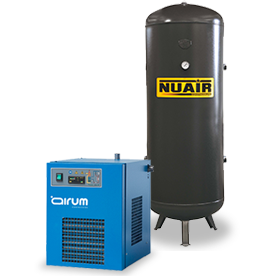
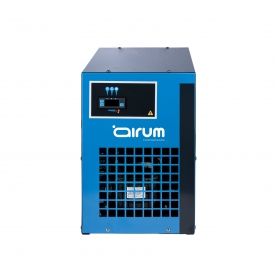
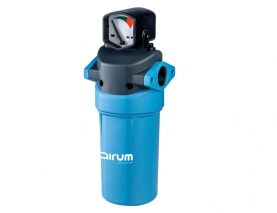
This is not a problem with the compressor. The water coming out of the spray gun or tools is condensation: atmospheric air always contains water vapor, and when compressed and cooled inside the tank and pipes, this vapor turns into liquid water that eventually reaches the point of use. The more humid the environment or the longer the compressor runs, the more water accumulates. To reduce this, the first and simplest thing to do is to regularly drain the tank by opening the drain valve at the bottom of the tank, especially at the end of each day, to empty the accumulated water. If water is still a problem for your work (painting, moisture-sensitive tools, medical or food-grade air), the appropriate solution is to install an air treatment system: a refrigerated dryer, which cools the air to condense and remove moisture before it reaches the system, or filters located at the compressor outlet. The most suitable treatment depends on the level of dryness you require and how often you use the air conditioning. If you already have a dryer and filters, the dryer may be switched off or malfunctioning. If you're unsure which solution best suits your needs, please contact us for guidance.

 +34 676 40 40 60