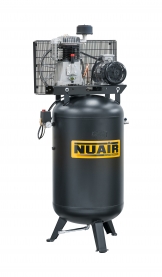
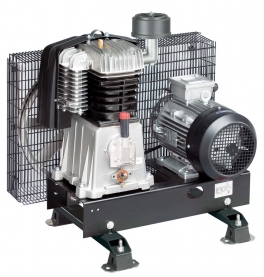
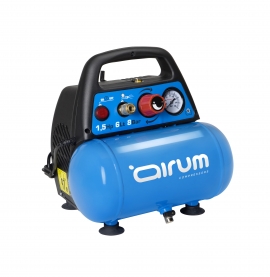
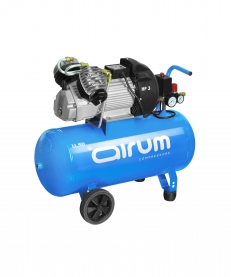
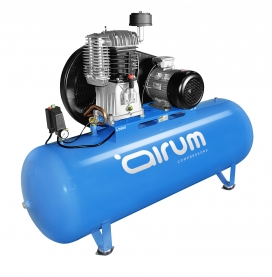
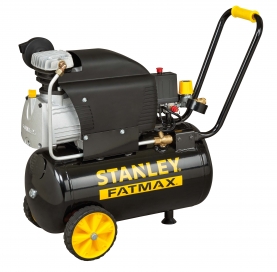
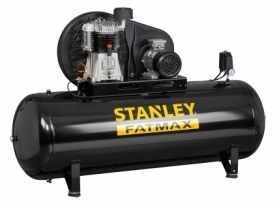
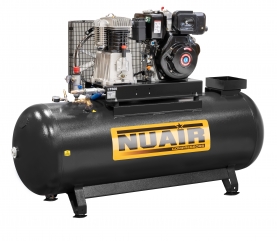
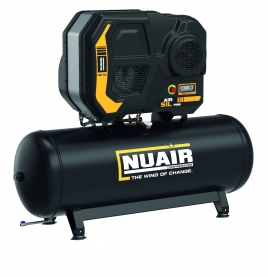
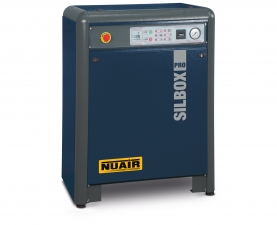
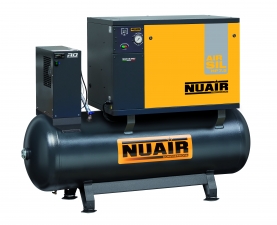
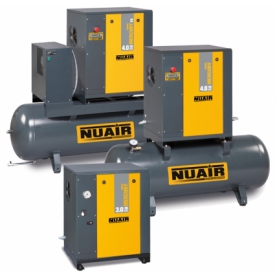
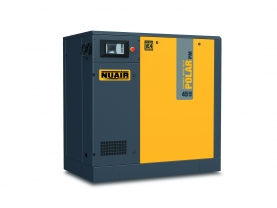
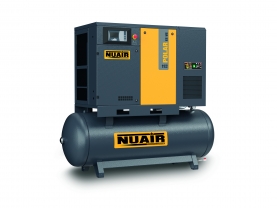
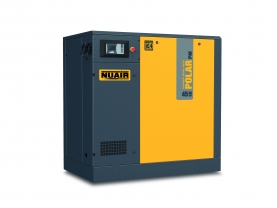
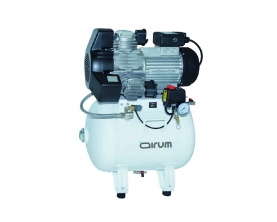
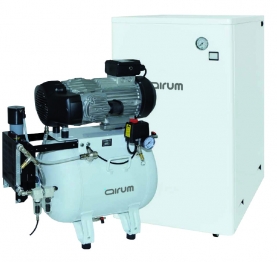
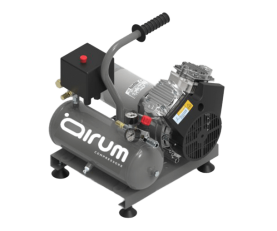
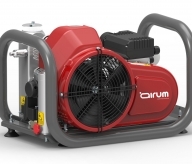
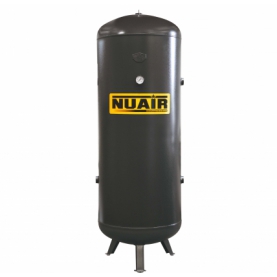
At AIRUM, we have spent decades helping workshops, businesses and professionals to select the correct size of compressed air equipment. This guide summarizes the key points you should check before deciding on a piston, screw, silent or oil-free compressor.
The first – and most important – step is to clearly define how the compressor will be used. A machine used occasionally for small DIY jobs at home is not the same as one that runs for several hours a day powering pneumatic tools in a workshop, or one that operates almost continuously on an industrial production line.
The most common uses for air compressors can be grouped into these broad categories:
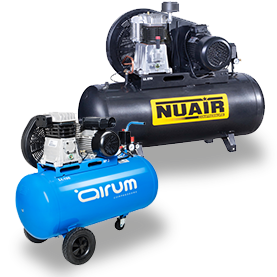
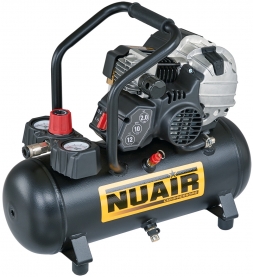
Consumer: inflating tyres, occasional blow-down cleaning and small household maintenance tasks. In this case, use is sporadic, air consumption is very low, and the compressor spends most of its time idle. If this applies to you, you may wish to consider, amongst other options, our compact AIRUM piston compressors →
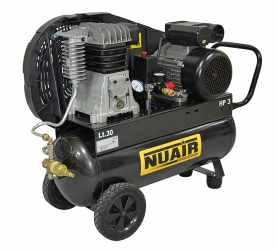
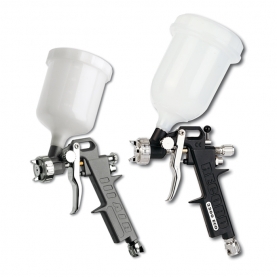
Advanced consumer and demanding domestic use: small paint spray guns, pneumatic nailers, impact tools for more frequent jobs or renovation projects. Air consumption remains moderate, but the duration of use is somewhat longer, so a more robust unit is advisable to prevent it from constantly operating at its limits. If your usage is more akin to that of a professional (many hours per month and demanding tools), it is advisable to opt directly for a professional-grade compressor. In these cases, you may wish to consider, amongst other options, our belt-driven piston compressors →
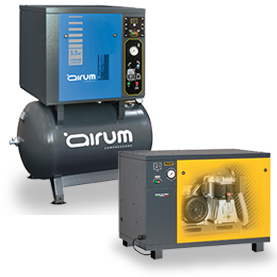
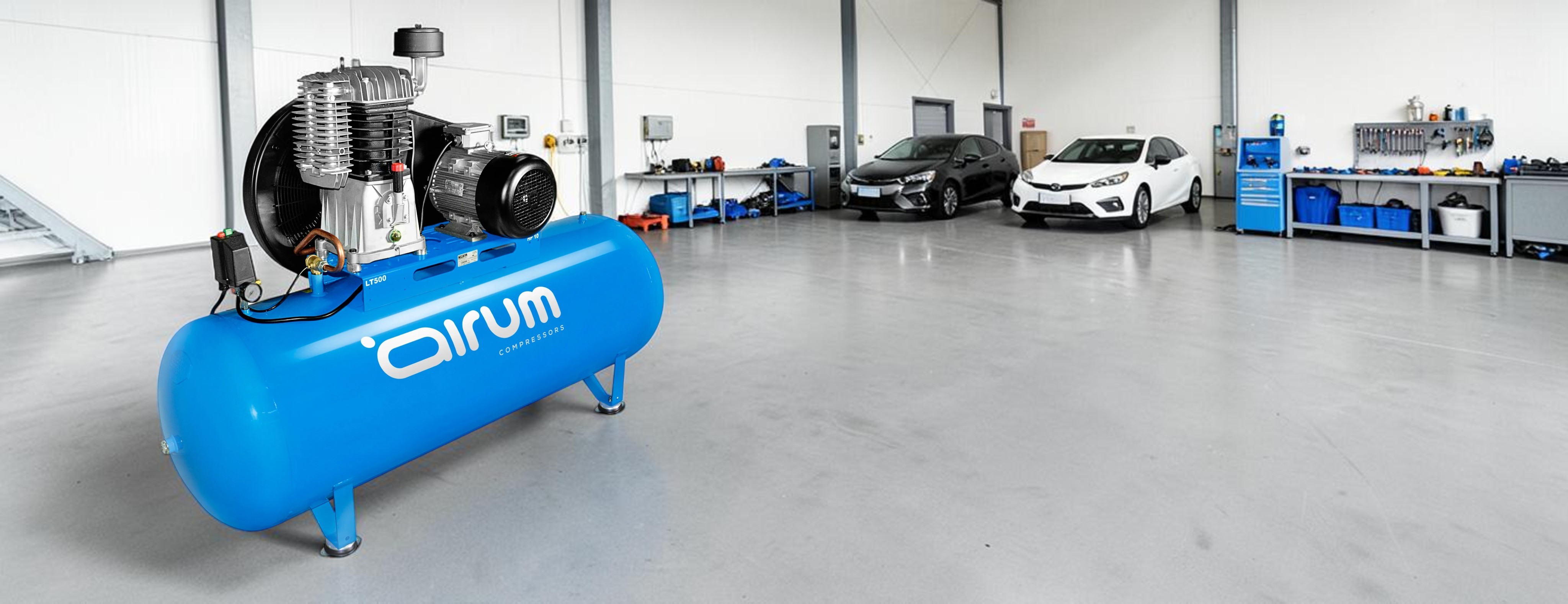
Professional mechanical, bodywork or carpentry workshops: several pneumatic tools may be in use at the same time, the compressor is used for hours on end, and higher air flow rates and reliability are required. The equipment should be selected with the number of workstations and daily operating hours in mind. In bodywork and paint shops, air consumption is usually even higher than in a standard mechanical workshop, so the compressor must be selected with particular care. For this type of use, it usually makes sense to start with our professional piston compressors, amongst other available solutions →
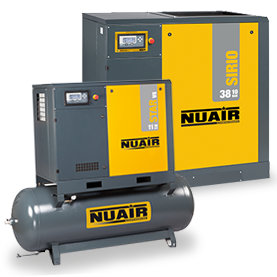
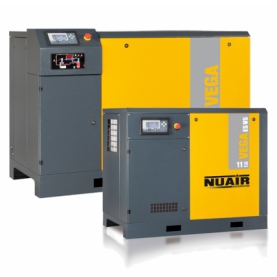
Small-scale industry and maintenance: production lines with several pneumatic machines, high-performance painting equipment, blowing systems and pneumatic material handling. In this case, compressed air is clearly critical to the process and compressor downtime affects production. For these situations, you can consider, amongst other options, our screw compressors for industrial use →
Industry with continuous consumption: production that relies on compressed air during long shifts, with several pieces of equipment connected simultaneously, where a compressor shutdown leads directly to the line or plant coming to a halt. For continuous consumption and critical processes, the logical choice is industrial screw compressors →
The more critical compressed air is to your business and the more hours the equipment operates, the more important it is to get the compressor sizing and the chosen technology right in each case.
The air flow rate is the amount of air that the compressor can supply continuously. It is the key factor in correctly sizing any compressed air system; yet it is the one most often overlooked when choosing equipment based solely on its power or price.
Air flow is normally expressed in liters per minute (l/min) or cubic meters per hour (m³/h). To work out how much air flow you need, you must first identify which tools or machines will be running at the same time and add up their air consumption. It is recommended that you always add a safety margin of between 25% and 30% to this figure, based on the calculated demand, so that the compressor is not constantly operating at full capacity and the system can accommodate future expansions without any problems.
If the compressor’s airflow is lower than the actual consumption, the pressure will drop during operation, the tools will lose power and operate outside specifications or shut down. In piston compressors, furthermore, the unit stops performing normal start-stop cycles and is forced to operate almost continuously, resulting in higher temperatures and greater mechanical stress. This forced operation can accelerate wear and lead to premature breakdowns. This is one of the most common mistakes made when selecting a compressor: focusing solely on the motor power rather than on the actual volume of air the unit can deliver at the working pressure.
It’s also important to keep in mind that technical specifications may list more than one flow rate: the suction or displacement flow rate—which is the rate the compressor produces under ideal conditions—and the effective or actual flow rate—which is the rate that can actually be used in the system, taking into account losses and real operating conditions. To compare compressors and select the correct size, you should always look at the effective flow rate, not the theoretical one, and make sure you’re comparing the same type of data across different models.
|
Tool |
Typical Consumption (L/min) |
Brief Comment |
|
Air blow gun / duster |
100–250 |
Intermittent use, low-to-medium consumption. |
|
½″ Impact wrench |
150–450 |
Frequent use in automotive workshops; heavy-duty models reach 450. |
|
¾–1″ Impact wrench |
280–1100 |
Heavy-duty applications/commercial vehicles; 1″ high-torque models (2000+ Nm) consume between 630 and 1100 L/min at full load. |
|
Pneumatic drill |
80–200 |
Depends on drill bit diameter and load conditions. |
|
Orbital sander |
80–500 |
Highly variable: lightweight fine-finishing sanders consume very little; professional high-speed models (150 mm, 12,000 rpm) can reach 500. |
|
Angle grinder |
100–1050 |
Highly variable depending on disc diameter and rpm; can exceed 1000 L/min at full load and high speed. |
|
HVLP spray gun |
200–500 |
Continuous flow, critical in paint booths. |
|
Nailer / stapler |
30–70 |
Short spikes, intermittent consumption. |
|
Pneumatic vehicle lift |
180–300 |
Operates in cycles; reference value, recommended to verify with the manufacturer. |
|
Sandblasting equipment |
500–2000 |
Very high consumption, requires an oversized compressor. |
***Note: These values are for guidance only and may vary depending on the manufacturer and model. To calculate the required compressor, add up the power consumption of all the tools that will be used simultaneously (not the total power consumption of all the tools in the workshop) and apply an additional safety margin of 25–30% to that calculated demand to cover losses due to leaks, pressure drops, and peak usage. If the compressor is a piston type, it is advisable to oversize it further so that it operates in start-stop cycles (not continuously), thus preventing premature wear and overheating of the equipment.***
Pressure indicates the force with which the compressor supplies air and is measured in bar or psi. Each pneumatic tool has a recommended working pressure that must be observed for it to function properly: if the pressure is insufficient, the tool will not perform well; if it is excessive, the tool may be damaged or become dangerous.
The vast majority of common applications in auto repair shops, body shops, paint shops, and woodworking shops operate at a pressure between 6 and 10 bar. For many workshop pneumatic tools, the recommended supply pressure is around 6–6.3 bar; therefore, a compressor set to 8 bar of working pressure is usually sufficient to meet the needs of grinders, sanders, impact wrenches, and paint spray guns, provided the system is properly sized.
However, before choosing a compressor, you should check the specific requirements of each machine or tool to be connected to the system. In certain specific cases—such as certain industrial machines, specialized equipment, or systems operating at 15 bar or higher—compressors rated for higher pressures are required, or even specialized equipment capable of reaching 20–30 bar or more in very specific applications. View the range of 15-bar piston compressors here →
Furthermore, the pressure required at the point of use is not exactly the same as that produced by the compressor. There are always pressure losses throughout the air distribution network (pipes, fittings, hoses, filters, and regulators). The longer the network or the narrower the pipe, the greater these losses will be. Therefore, when sizing the system, it is necessary to calculate the pressure required at the point of use and add a margin to compensate for these losses. For example, if a tool needs to operate at 6.3 bar, the tank outlet and the main line should be sized to maintain that 6.3 bar, despite any losses that may occur along the route.
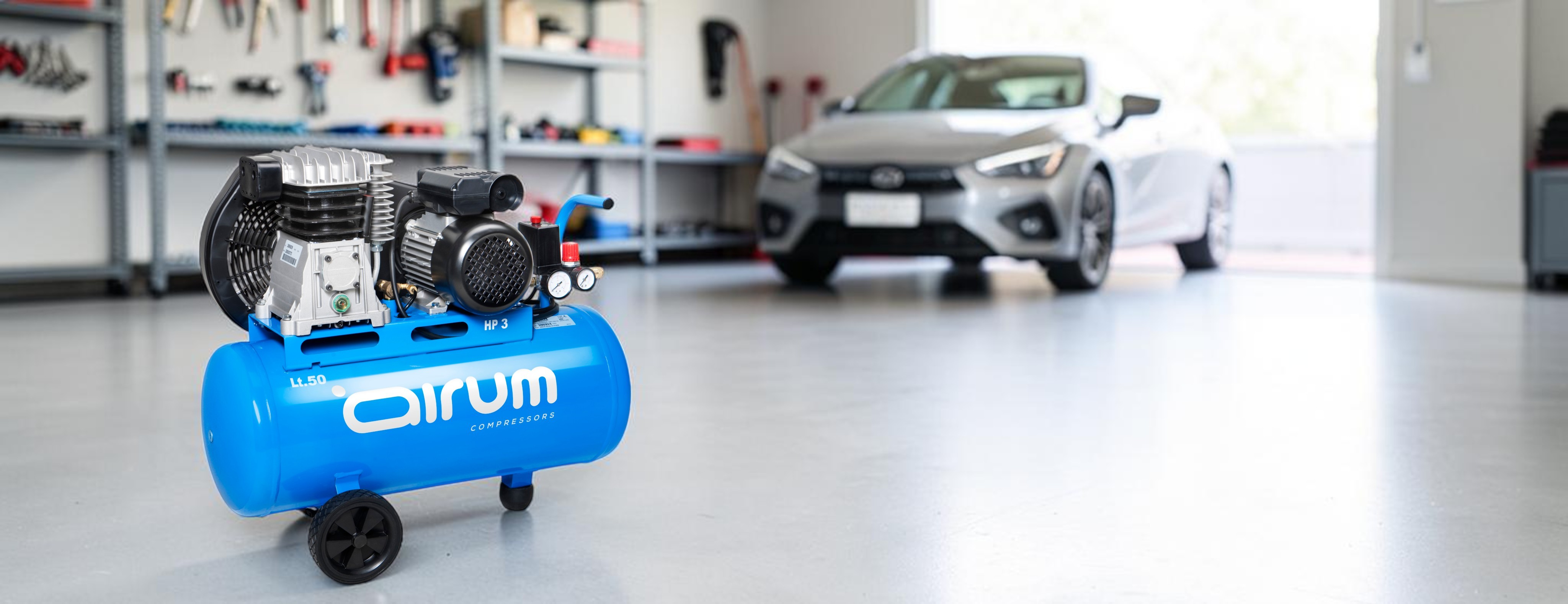
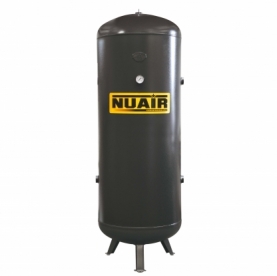
The air tank is a pressurized air reservoir that serves as a buffer to cover peaks in air consumption and stabilize pressure in the system. A larger air tank allows the compressor to operate in longer cycles with fewer starts, which reduces wear on the motor and the compressor head.
However, a large tank does not compensate for insufficient airflow. If the compressor does not have enough airflow to replenish the air consumed by the tool, the tank will still empty quickly and the pressure will drop. The tank is a reserve, not a solution to improper sizing.
This is the key technological decision. Understanding the differences between a piston compressor and a screw compressor will help you choose the most suitable equipment and avoid oversizing or undersizing it.
A piston compressor compresses air through the reciprocating motion of one or more pistons inside a cylinder. It produces pulsating air, which is then stored and stabilized in the tank. It is the most widely used technology in workshops, businesses, and professional settings due to its simplicity, low initial cost, and ease of maintenance. Its main limitation is that it is not designed for continuous operation; rather, it requires rest periods to prevent the compressor head from overheating. Its efficiency typically ranges between 60% and 70%. As power output and operating hours increase, electricity consumption and wear and tear increase significantly.
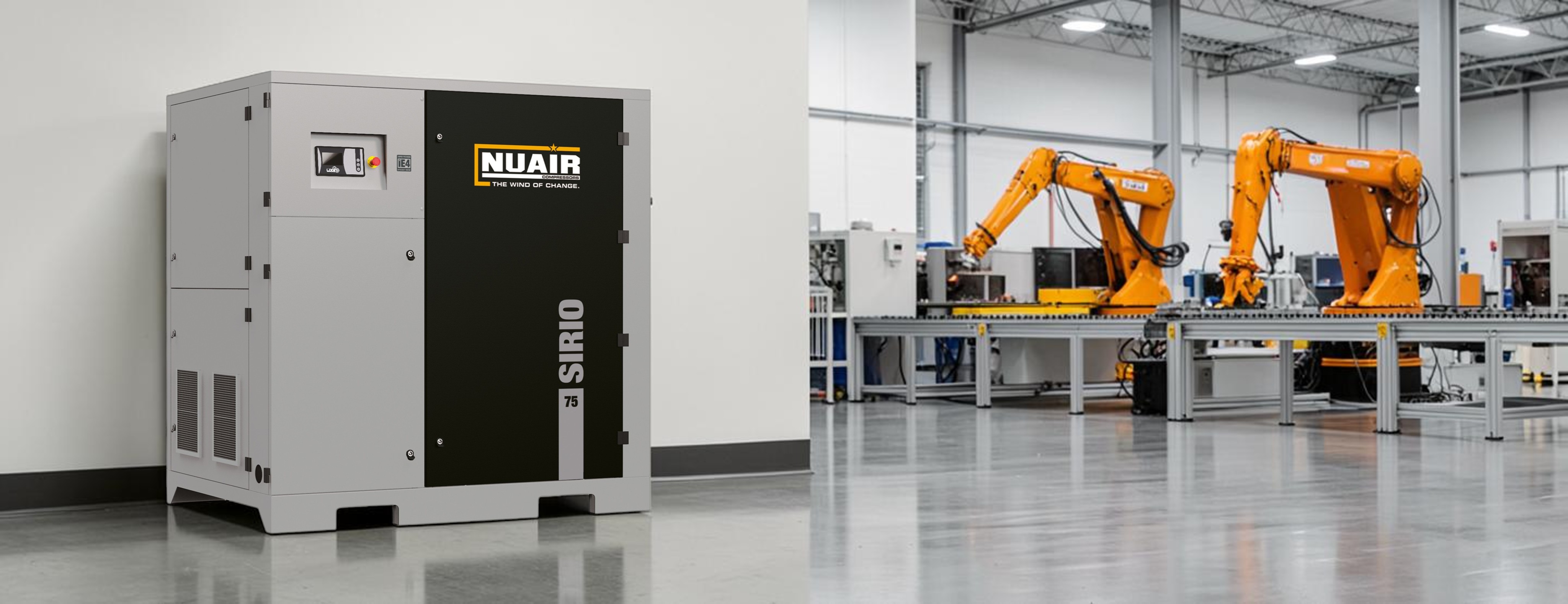
The screw compressor compresses air through the continuous rotation of two helical rotors (male and female) that never come into contact with each other or with the housing. It produces constant and uniform airflow, without the pulsations of a piston, and is designed to operate continuously for many hours a day. The rotors do not wear down due to contact, resulting in lower long-term maintenance costs, and their efficiency can approach 96%. Additionally, the screw compressor is significantly quieter than a piston compressor of the same power rating, which is very important when it must be installed inside a workshop or near work areas. The initial cost is higher than that of a piston compressor of the same power rating, but in high-demand or continuous-use applications, the cost per cubic meter of air produced is significantly lower thanks to its better energy efficiency.
To decide between the two, you need to ask yourself the following questions: How many hours a day will the compressor run? How many tools or machines will be connected at the same time? And can the process tolerate compressor downtime, or is a continuous air supply critical? In practice, above a certain power rating—roughly 10 HP or more—it’s usually more advantageous to opt for screw technology, since the difference in efficiency and electricity consumption compared to a large piston compressor is clearly reflected in the energy bill and in the equipment’s durability.
In general, for intermittent use, small or medium-sized workshops, and moderate consumption, piston technology is the most logical and balanced choice. For high-demand installations, nearly continuous use, and processes where compressed air is critical to production, screw technology is the most reliable and efficient long-term solution, especially at medium and high-power ratings, as the difference in noise and energy consumption compared to piston technology is very evident.
With piston compressors, it is common to size the unit larger than the actual demand, since they require distinct start-up and shutdown cycles to cool down properly. If the unit is too small, it will run almost continuously, overheat, and have a shorter service life. In contrast, screw compressors allow for much better matching of installed capacity to the actual air consumption of the workshop or plant because they are designed to operate continuously, and in many models, electronic controls adjust operation to the flow rate needed at any given moment. This has two significant advantages: you can operate with slightly less power than would be required by a piston compressor for the same installation, and, furthermore, a more efficient motor is used, resulting in energy and cost savings over the compressor’s lifetime.
In addition to the technological difference, the screw compressor offers several significant practical advantages over the piston compressor. It is significantly quieter at the same power output, which improves comfort in the workshop when the equipment must be installed near workstations. It is also more energy-efficient, as it consumes less electricity for the same air flow, resulting in direct savings on the utility bill and a lower cost per cubic meter of air in the medium and long term. In addition, most screw compressors feature electronic control panels that monitor operating parameters, alert users to maintenance needs, and detect malfunctions in advance—features that piston compressors typically lack. All of this makes the screw compressor a more modern, controlled, and cost-effective solution in the long term for demanding professional applications.
|
Piston vs. Screw |
Piston Compressor |
Screw Compressor |
|
Application Type |
★★★★☆ Well-suited for intermittent duty |
★★★★★ Ideal for continuous professional operation |
|
Efficiency & Consumption |
★★☆☆☆ Lower energy efficiency |
★★★★★ Highly efficient, optimal consumption per m³ |
|
Duty Cycle |
★★☆☆☆ Requires start/stop cycles. Not designed for continuous running hours |
★★★★★ Designed for heavy-duty, long-shift operation |
|
Noise & Vibration Level |
★★☆☆☆ Higher noise and vibration output |
★★★★★ Quieter operation with minimal vibration |
|
Initial Cost |
★★★★★ Highly cost-effective |
★★☆☆☆ High initial capital investment |
|
Maintenance |
★★★★★ Simple and economical |
★★★★☆ Moderately higher maintenance cost |
|
Wear & Flow Stability |
★★☆☆☆ Internal wear over time reduces performance and lowers air delivery compared to new |
★★★★★ Minimal wear; maintains consistent air output from day one through end of life with proper maintenance |
|
Controls & Diagnostics |
★★☆☆☆ Basic controls with limited feedback |
★★★★★ Advanced electronics, alarm systems, and easy diagnostics |
Within piston technology, there are several configurations that meet different needs:
With screw technology, the first parameter to define—just as with any other compressor—is the effective airflow required by the system. From there, you select the unit’s power rating (in HP or kW), the operating pressure, and the size of the system. The goal is not to choose “a high-horsepower screw compressor,” but rather a compressor whose effective flow rate and pressure cover the plant’s actual consumption with some margin, without oversizing it excessively.
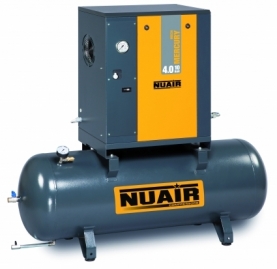
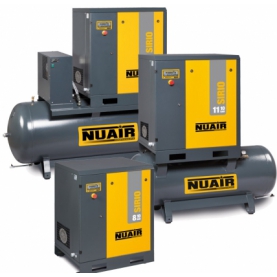
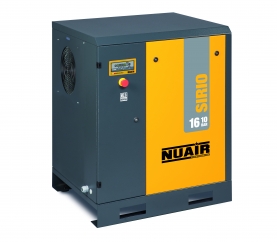
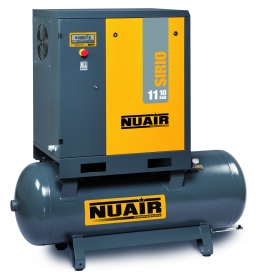
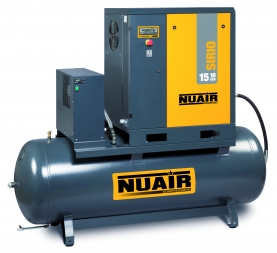
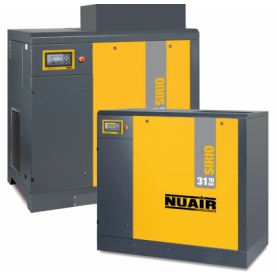
Once the flow rate is defined, the other decisions must be made: power rating, mechanical configuration, and equipment. A basic screw compressor (without an air receiver) can be connected to one or more external tanks. Versions with an air receiver integrate the tank into the unit, which simplifies installation and provides an air reserve that helps stabilize pressure and better manage consumption peaks. Models with an integrated air receiver and dryer are the most comprehensive solution for installations that also require drier air, since the integrated dryer removes moisture from the compressed air, eliminating the need to install a separate external dryer. Airum and Nuair Screw Compressors →
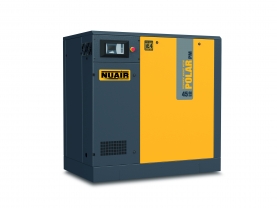
Some models feature a variable frequency drive (also called an inverter), Polar screw compressors with variable-speed drives → which regulates the motor speed in real time, adapting precisely to the airflow demand and eliminating full-load starts and stops. This technology can result in significant energy savings in installations with variable consumption, as it prevents the compressor from operating at full load when the system only needs a portion of the available airflow.
Noise is an aspect that is often underestimated when choosing a compressor, especially if it is to be located inside the workshop or near workstations.
Open-type piston compressors typically generate high noise levels, exceeding 90 dB(A) in some models. Such a high noise level, sustained throughout the workday, can be disruptive to operators, interfere with communication within the workshop, and even pose a problem from the standpoint of workplace noise regulations. In these cases, there are three options: choose a soundproofed compressor, install the equipment in a separate technical room with adequate ventilation, or combine both measures.
Screw compressors are significantly quieter than piston compressors, with typical noise levels starting at 64 dB(A), depending on the model and power rating. This makes them better suited for installations where the compressor must be located near workstations or in areas where noise is a major concern.
Regarding location, keep in mind that air compressors require a well-ventilated environment with controlled temperature and access for maintenance. If a compressor operates in an enclosed space without air circulation, it can overheat, which reduces its performance and service life. Therefore, it is essential not to install the equipment flush against a wall or squeeze it into spaces that are too tight, but rather to leave about 50–60 cm of clearance around the ventilation and access areas, for both piston and screw compressors. Many breakdowns and shutdowns due to high temperatures are caused precisely because air cannot circulate properly—either because the compressor is too close to the wall or because it is surrounded by obstacles. Carefully planning the space, minimum clearances, and airflow paths before installing the equipment prevents many problems later on.
Before selecting a compressor, it is essential to review the characteristics of the electrical system available at the installation site. This point is particularly important, as an error could necessitate costly electrical modifications or limit the equipment’s performance.
The main aspects to verify are as follows: whether the installation has a single-phase power supply (typically 230 V) or a three-phase power supply (400 V; older installations may still have three-phase 230 V), the power capacity contracted with the utility company, and the gauge of the wiring and existing protective devices. Lower-power compressors (up to approximately 2–3 kW) typically operate on a standard single-phase power supply. Above a certain power level, compressors require a three-phase power supply, both due to the operating voltage and the starting current they generate.
It is also important to consider the compressor’s starting current, especially in installations with limited electrical capacity. Some models incorporate star-delta starting systems—which are very common in screw compressors of a certain power rating—or variable frequency drives (inverters), which significantly reduce the peak current when the motor starts. These systems can be crucial for preventing circuit breakers from tripping or the system from becoming overloaded at each startup.
In addition to selecting the right compressor, it is necessary to properly size the electrical protection: a circuit breaker and a ground-fault circuit interrupter (GFCI) suitable for the motor type, its rated current, and its starting method. In many cases, C- or D-curve circuit breakers are used to handle the start-up inrush currents typical of motors and prevent premature tripping. These circuit breakers must always be combined with a thermal relay or specific motor protection. Therefore, before installing the compressor, it is advisable to have an electrician check the curve and rating of the existing protection devices and adapt them to the type of compressor and its starting system, so that the equipment is protected without the circuit breakers tripping every time it starts.
Not all applications require the same level of compressed air quality. For standard workshop tools, such as impact wrenches, blowers, or nail guns, the presence of some moisture or oil in the air is not usually a serious problem if basic treatment is available. However, in other sectors or applications, air quality is a critical requirement that must be defined from the outset.
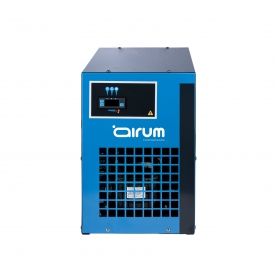
Moisture is the first factor that must be controlled. Air always contains water vapor, which condenses when compressed and can accumulate in pipes, tools, and machinery. To remove this moisture, dryers (refrigeration or adsorption types) DSI Series Refrigerated Dryers → are installed at the compressor outlet, before the distribution network. In high-quality painting, food, pharmaceutical, electronics, or medical air applications, the presence of water in compressed air can ruin the process or result in non-compliance with applicable standards.
Oil is the second critical factor in certain processes. Lubricated compressors—both piston and screw types—use oil to lubricate the compression mechanisms. Although most models incorporate highly efficient separators, traces of oil may still remain in the air. For applications where there can be no trace of oil in the air (food, beverages, pharmaceuticals, electronics, or high-end painting), the appropriate solution is an oil-free compressor combined with a filtration system sized to meet the required purity level.
Filtration also removes solid particles, dust, and microorganisms present in the air, depending on the filtration grade installed. In comprehensive industrial systems, it is common to combine a compressor, a dryer, filters of various grades, and, in some cases, specific purifiers to achieve the level of air quality required by each process.
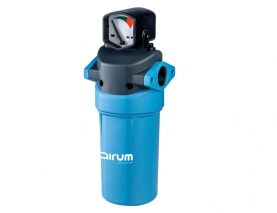
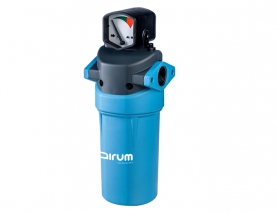
To ensure that manufacturers, installers, and users speak the same “language,” the ISO 8573-1 standard is used, which defines different classes of compressed air quality based on three parameters: solid particle content, water content (dew point), and total oil content (aerosol, vapor, and liquid). Each ISO class establishes maximum limits for these three variables. Thus, an application may require, for example, “Class 2.4.2 compressed air according to ISO 8573-1,” which clearly indicates the levels of particles, moisture, and oil that the system must guarantee. When selecting a compressor, dryer and filters See FGO Series Line Filters →, it is highly recommended to define from the outset which ISO class is required for your process and to size the air treatment system with the goal of achieving that class, rather than referring generically to “dry air” or “clean air”.
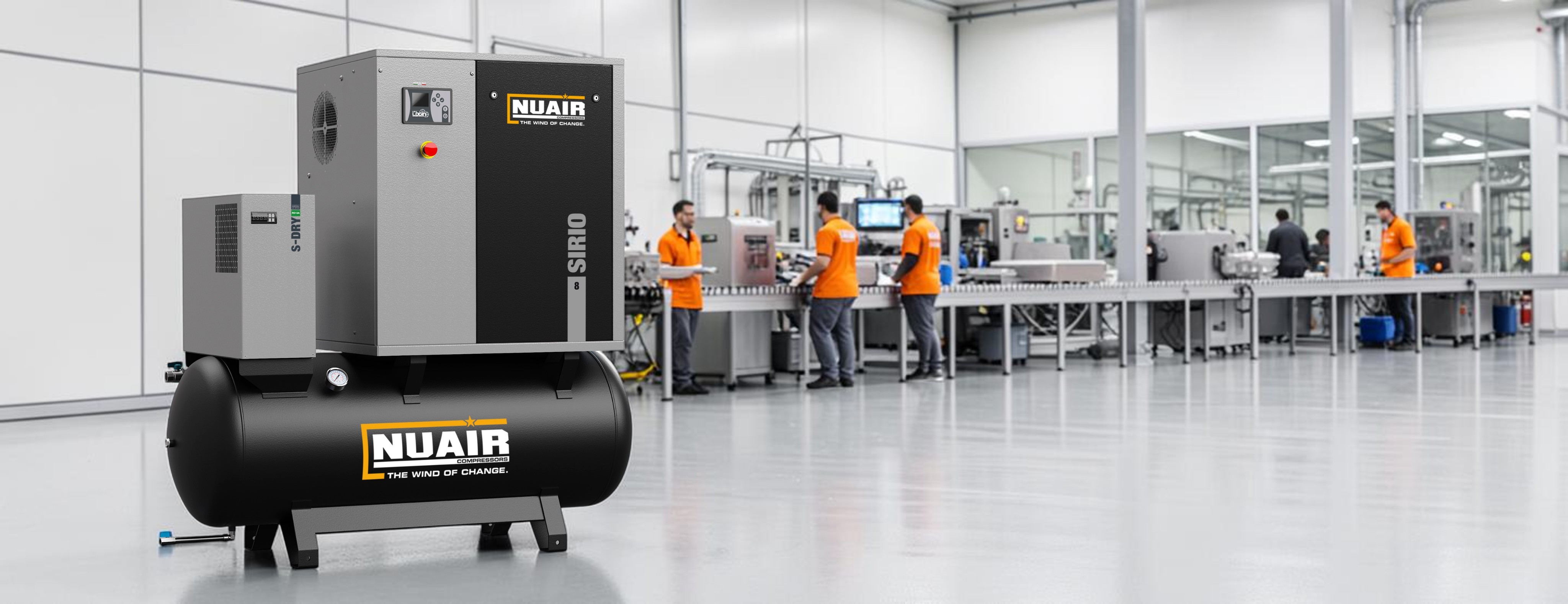
One factor that directly influences the choice of compressor and its durability is the duty cycle—that is the proportion of time the compressor is running compared to the total operating time.
Piston compressors have a limited duty cycle, which in professional models is typically between 50% and 70%; this means that, for every hour of operation, the compressor must be shut down for a period of time to allow the compressor head to cool down. If the compressor regularly operates above its recommended duty cycle, wear and tear accelerates, operating temperature rises, and the equipment’s service life is significantly reduced.
Screw compressors are designed for 100% duty cycles, so they can operate continuously 24 hours a day without needing to shut down due to temperature. This is one of the most significant differences between the two technologies in industrial facilities: a screw compressor can operate at the pace dictated by the plant’s demand, while a piston compressor needs to alternate between periods of load and periods of rest.
If your installation requires the compressor to run for many hours a day or virtually nonstop, it is essential to take this into account from the outset so as not to choose equipment that will wear out prematurely or force you to halt production. In practice, this means that a reciprocating compressor must be oversized relative to actual consumption in order to handle these start-stop cycles without always operating at its limit, whereas a screw compressor can be much more closely matched to the required flow rate, since it is designed for continuous operation. Therefore, in the same installation where a reciprocating compressor would need to be more powerful to compensate for its idle periods, a less powerful screw compressor, with a properly sized flow rate, can perform the same work more reliably and with better energy efficiency.
A common mistake is to compare compressors based solely on their purchase price. However, the actual cost of a compressed air system over its useful life includes many other factors.
In many cases, electricity consumption is the largest operating cost of a compressor. A more efficient unit can consume less energy to produce the same airflow, which in installations with many operating hours can result in considerable savings in the medium and long term. In screw compressors, the variable frequency drive option can significantly reduce electricity consumption in installations with variable demand.
Maintenance costs also vary depending on the technology and model. Reciprocating compressors have a lower maintenance cost per service call but require more frequent service, especially in models subject to heavy use. Screw compressors have a higher maintenance cost per service call but require fewer service calls per operating hour, and their major components experience less deterioration.
The cost of unplanned downtime is the most difficult to quantify, but it has a major impact on critical production processes. An improperly sized or poorly maintained compressor that shuts down at the wrong time can result in losses far exceeding the cost of the equipment itself.
In addition to flow rate, pressure, and technology, when choosing a compressor, it’s important to consider the maintenance it will require. A well-maintained unit can operate for many years at peak performance, while a neglected one can develop problems quickly—even if it’s high-quality.
With piston compressors, maintenance is simpler but requires more frequent checks (oil, filters, tank drainage, and belts). With screw compressors, service intervals are longer and maintenance is more specialized, so it’s usually advisable to rely on an authorized service provider or a maintenance plan. Being clear from the start about the level of maintenance you’re willing to handle will help you choose the type of compressor and model that best suits your workflow.
When compressed air is essential for daily operations, it’s not enough to simply choose a single compressor wisely; you must also consider what will happen the day that unit shuts down for scheduled maintenance or due to an unexpected breakdown. If there’s only one compressor and it shuts down, the facility runs out of air, and production or service often comes to a complete standstill—with the associated costs.
From experience, whenever compressed air is critical to the workshop or business, it is advisable to consider having two compressors instead of just one. This could involve a primary unit and a backup unit, ready to take over when necessary, or two compressors operating in parallel that alternate to distribute operating hours. Having a second compressor does not mean the first one will break down; rather, it provides the system with a “Plan B”: it allows for scheduled maintenance, reduces the risk of unplanned downtime, and, if properly configured, can help optimize energy consumption by distributing the load between the two units.
In many facilities, it makes sense to keep the older unit as a backup—provided it is in good condition and is periodically tested under load—when replacing an old compressor with a new one. In this way, the new compressor takes on the main workload, while the old one serves as a backup for emergencies or peak demand periods, preventing a malfunction from leaving the workshop or plant completely without compressed air.
| TYPE | Subtype / Model | Power (HP) | DIY | Artisan / Workshop | Industry | Light Vehicle Mechanics | Body Shop | Industrial Vehicle Mechanics | Outdoor Work |
| PISTON (RECIPROCATING) | DIY - Oil-free | 0.75 to 2.5 HP | Yes | Yes | |||||
| DIY - Lubricated | 2 to 3 HP | Yes | Yes | ||||||
| Belt-driven | 2 to 3 HP | Yes | Yes | Yes | |||||
| Two-stage belt-driven | 5.5 to 10 HP | Yes | Yes | Yes | |||||
| Heavy-duty two-stage belt-driven | 5.5 to 7.5 HP | Yes | Yes | Yes | |||||
| TECH Range | 2 to 3 HP | Yes | Yes | Yes | |||||
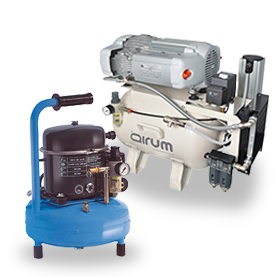
| Silent airbrushing | 150 to 680 W | Yes | Yes | ||||||
| Soundproofed | 3 to 5.5 HP | Yes | Yes | ||||||
| Soundproofed | 7.5 HP | Yes | Yes | Yes | |||||
| Soundproofed | 10 HP | Yes | Yes | Yes | |||||
| Petrol / Gasoline engine | 4 to 9 HP | Yes | Yes | Yes | |||||
| Diesel engine | 7.5 to 10 HP | Yes | Yes | Yes | |||||
| ROTARY SCREW | Compact / Orion Range - Belt-driven | 5.5 to 10 HP | Yes | Yes | Yes | Yes | |||
| Polar Range - Direct driven | 7.5 to 100 HP | Yes | Yes | Yes | Yes | ||||
| SIRIO / DBS Range - Belt-driven | 10 to 100 HP | Yes | Yes | Yes | Yes | ||||
***Choosing the right air compressor is essential to ensure your tools and machinery perform as expected, without downtime or unexpected issues. It’s not just a matter of looking at the power output or the size of the tank, but of matching the equipment to the type of work, the required air flow and the number of hours of daily use.***
To conclude this guide, it’s worth reviewing the most common mistakes that lead to choosing a compressor that’s unsuitable for the intended use:
In summary, choosing the right air compressor involves more than just looking at the power rating or tank size; it requires matching the equipment to the actual application, the required flow rate, the working pressure, the operating hours, and the air quality demanded by each application.
Defining the intended use of the compressor, the tools or machines it will power, and the operating conditions from the outset helps avoid the most common mistakes: undersizing the airflow, running a piston compressor for more hours than it is designed to handle, failing to inspect the electrical installation, or failing to plan for air treatment.
If you’re replacing an existing compressor, it’s also important to analyze how the previous unit performed (whether it was underpowered or clearly oversized) to better size the new compressor and ensure it’s truly suited to actual consumption.
With these points in mind, it becomes much easier to decide between a piston or screw compressor, properly size the equipment, and assess the total cost over its useful life—beyond just the purchase price.
And if you still have questions, at AIRUM we can help you size your system and choose the most suitable range of compressors for your specific needs. You can contact us, and an AIRUM specialist will get back to you shortly →

 +34 676 40 40 60